As a seasoned Admin with over a decade of experience in the world of ornamental dogs and their accessories, I’ve had my paws on countless types of dog harness and leash combinations. From the simplest designs to the most innovative, I understand the nuances that make a walk truly enjoyable for both you and your cherished canine companion. Are you tired of walks feeling like a tug-of-war, or worried about your dog’s safety and comfort? Selecting the right dog harness and leash isn’t just about control; it’s about fostering a bond and ensuring every outing is a positive experience. This comprehensive guide will equip you with the knowledge to make an informed choice, transforming your daily strolls into harmonious adventures.
What Are Dog Harnesses and Leashes and Why Are They Important?
A dog leash is essentially a tether used to guide and control your dog during walks, ensuring their safety and adherence to local leash laws. A dog harness, on the other hand, is a piece of equipment that fits around a dog’s torso, typically connecting to the leash at the back or front. While a collar wraps around the neck, a harness distributes pressure across your dog’s chest and shoulders, which is significantly safer and more comfortable, particularly for puppies, small breeds with delicate tracheas, or dogs prone to pulling [cite: 4 (dog harness vs collar and leash)]. This fundamental difference in design makes harnesses crucial for preventing neck injuries and providing better overall control. Ultimately, the right dog harness and leash combination is vital for preventing escapes, ensuring safety in public spaces, aiding in training, and enhancing your dog’s comfort during any activity.
Common Types of Dog Harnesses and Leashes and Their Pros & Cons
Navigating the vast array of dog harness and leash options can be daunting. Understanding the different types available and their specific benefits and drawbacks is the first step toward making the best choice for your furry friend.
Dog Harness Types
- Back-Clip Harness: This common style features a D-ring or leash attachment point on the dog’s back, usually between the shoulder blades or further down the spine.
- Pros: Simple, generally comfortable, easy to put on, and minimizes leash tangling, making it ideal for calm dogs. [cite: 2 (types of harnesses)]
- Cons: Less effective for strong pullers, as it can inadvertently encourage them to lean into the pull. [cite: 2 (dog harness and leash guide)]
- Best For: Easygoing dogs, smaller breeds, puppies still learning leash manners, and casual walks.
- Front-Clip (No-Pull) Harness: These harnesses feature the leash attachment at the chest, often near the breastbone.
- Pros: Designed to gently redirect your dog’s forward motion back towards you when they pull, making it an excellent tool for training and managing strong pullers. [cite: 2, 3, 5 (types of harnesses)]
- Cons: The leash can sometimes get tangled with the dog’s legs if not managed properly, and some dogs may require time to adjust to the sensation. [cite: 2 (dog harness and leash guide)]
- Best For: Dogs in training, consistent pullers, and those prone to lunging.
- Dual-Clip Harness: Offering both front and back attachment points, these harnesses provide maximum versatility.
- Pros: You can use the front clip for better control during training or switch to the back clip for more relaxed walks, offering the best of both worlds. [cite: 2 (types of harnesses)]
- Cons: Can be slightly more complex to adjust and use initially due to multiple attachment options.
- Best For: Dogs requiring varied levels of control, intensive training, and adaptable walking styles.
- Head Halter (Gentle Leader): Resembling a horse’s bridle, this harness places a strap over your dog’s nose and another behind their ears, with the leash attaching under the chin.
- Pros: Provides superior control by redirecting your dog’s head, which in turn guides their body, highly effective for large, strong, or reactive dogs. [cite: 1, 4 (types of harnesses)]
- Cons: Some dogs initially resist wearing it, and it can be mistaken for a muzzle, potentially leading to social misconceptions.
- Best For: Very strong pullers, reactive dogs, or those needing advanced behavioral control.
- Step-In Harness: This design allows your dog to simply step into the harness with their front legs, making it a good choice for dogs that dislike having things slipped over their heads.
- Pros: Easy and quick to put on, ideal for dogs sensitive about their heads or ears. [cite: 2, 5 (types of harnesses)]
- Cons: Can be easier for a determined dog to back out of if not fitted snugly.
- Best For: Small dogs, older dogs, and those new to harnesses.
- Vest Harness: These harnesses offer broader coverage across the dog’s chest and back, often with padded materials.
- Pros: Provides excellent comfort and support, distributing pressure evenly, which is great for dogs with respiratory issues or sensitive skin. [cite: 2, 5 (types of harnesses)]
- Cons: Can be warmer in hot weather and might limit airflow for some breeds.
- Best For: Small breeds, brachycephalic (flat-faced) dogs, long-haired dogs, and dogs requiring extra support.
Dog Leash Types
|
Our Picks for the Best Dog Leash in 2026
As an Amazon Associate I earn from qualifying purchases.
|
||
| Num | Product | Action |
|---|---|---|
| 1 | 16Ft Retractable Dog Leash,Light Weight Leash for Small to Medium Dogs/Cats Up to 50lbs,Stainless Steel Spring Strong Nylon Tape, Tangle Free, One-Handed Brake.(Black) |

|
| 2 | Fida Retractable Dog Leash, 16 ft Dog Walking Leash for Small Dogs up to 26 lbs, 360° Tangle Free, Black |
|
| 3 | Frienda 30ft Galvanized Heavy Duty Dog Chain Tie out Heavy Duty Chain 3mm Chew Proof with 2 Safety Clips Rust Resistant Outdoor Dog Leash for Yard Camping Hiking Park Travel 440lbs Break Strength |
|
| 4 | 2 Pack Dog Leash, 4/5//6 FT Heavy Duty Nylon Rope Pet Leashes with Comfortable Padded Handle, Reflective Dog Leashes for Small Medium and Large Dogs (5FT-1/2,Black/Black) |
|
| 5 | 26Ft Retractable Dog Leash, Heavy Duty Great Leash for Dog up to 110 lbs, Anti-Slip Rubberized Handle, One-Handed Brake, Strong Nylon Tape, Tangle Free(Large Size). |
|
| 6 | Joytale Tactical Dog Leash Heavy Duty, 4-6FT Shock Absorbing Bungee Lead with 2 Padded Handle, Metal Carabiner Clip, Car Seatbelt, Strong No Pull Leash for Medium Large X-Large Dogs, Coyote Brown |
|
| 7 | iYoShop Hands Free Dog Leash with Zipper Pouch, Dual Padded Handles and Durable Bungee for Walking, Jogging and Running Your Dog (Large, 25-120 lbs, Black) |
|
| 8 | Hands Free Dog Leash, Adjustable Waist Leash for Dog, Handle Bungee 4.2-6.7 Feet Long with Reflective Stitches for Walking Hiking Running, Fits 26"- 43" Waist, Black & Blue |
|
| 9 | Taglory Rope Dog Leash 6 FT with Comfortable Padded Handle, Highly Reflective Threads Leash for Medium Large Dogs, 1/2 inch, Black |
|
| 10 | Joytale Dog Leash, 6 FT Double-Sided Reflective, Padded Handle Nylon Heavy Duty Leashes for Medium & Large Dogs Walking, Black |
|
- Standard Flat Leash (Nylon/Webbing): The most common and versatile type, typically 4 to 6 feet long.
- Pros: Durable, affordable, easy to clean, and provides a good balance of control and freedom for everyday walks.
- Cons: Can cause “leash burn” if not handled correctly, especially with strong pullers.
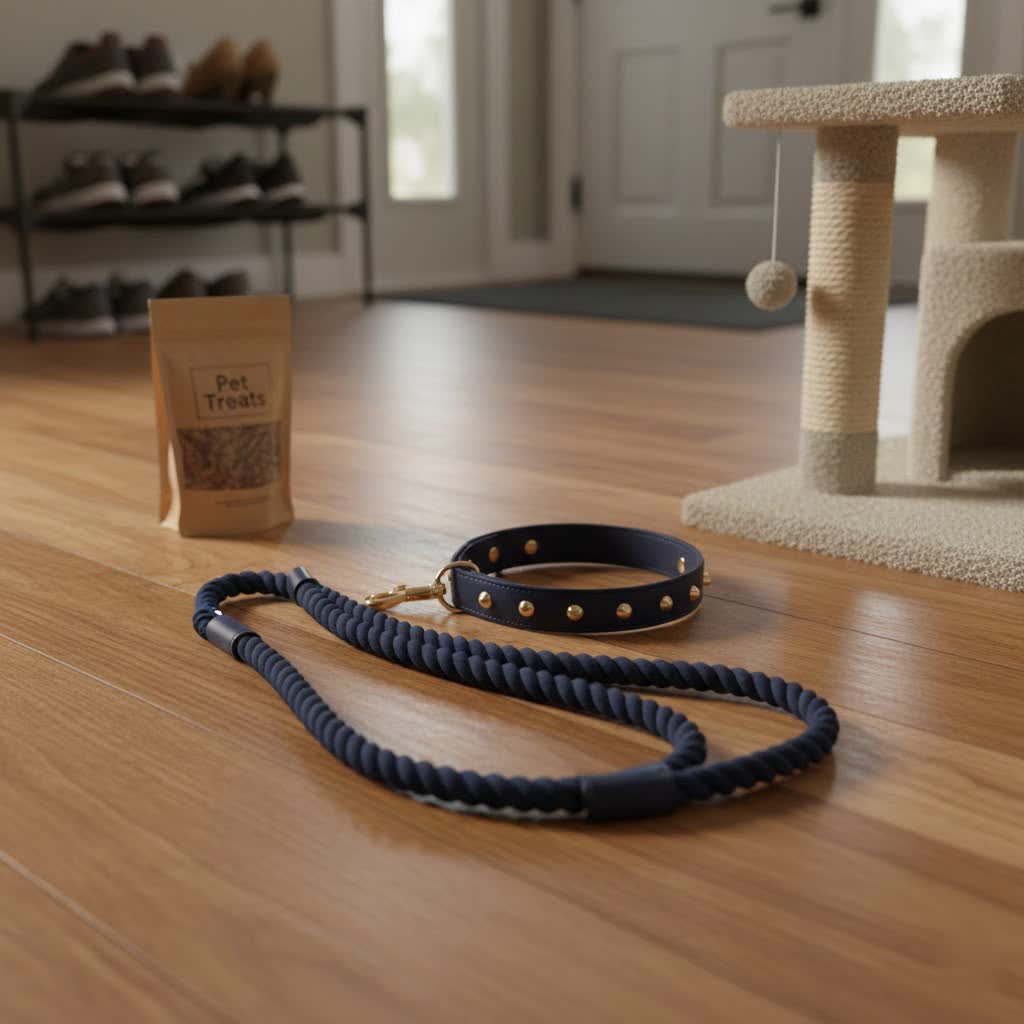
- Rope Leash: Made from braided or twisted rope, often with a thicker diameter.
- Pros: Extremely durable, offers a comfortable grip, and often has a stylish, classic aesthetic. [cite: 5 (how to choose leash)]
- Cons: Can be heavier, making it less suitable for very small dogs. [cite: 5 (how to choose leash)]
- Best For: Medium to large dogs, daily walks, and those seeking a sturdy, long-lasting option.
- Leather Leash: Crafted from high-quality leather, these leashes are a premium option.
- Pros: Exceptionally durable, incredibly comfortable to hold (softens over time), and develops a rich patina with age, offering a sophisticated look. [cite: 5 (how to choose leash)]
- Cons: Higher initial cost and requires occasional conditioning to maintain its quality.
- Best For: Owners who appreciate classic style and long-term investment, suitable for most dog sizes.
- Retractable Leash: Features a thin cord or tape that extends and retracts from a handle, allowing for adjustable length.
- Pros: Offers your dog more freedom to explore within a controlled range. [cite: 5 (how to choose leash)]
- Cons: Can be dangerous due to lack of immediate control, risk of entanglement, rope burns, and neck injuries, and is generally not recommended by professional trainers. [cite: 5 (how to choose leash)]
- Best For: Well-trained dogs in very open, safe areas, used with extreme caution.
- Training Leash (Long Lines): Much longer than standard leashes, typically 10 to 30 feet or more.
- Pros: Essential for recall training, practicing distance commands, and allowing supervised freedom in secure open spaces.
- Cons: Can easily get tangled, requires large, clear areas for safe use, and needs careful handling to prevent tripping.
- Multi-functional Leash (e.g., 6-in-1, double-ended): Designed with multiple rings and clasps for various configurations.
- Pros: Extremely versatile, allowing for adjustable length, hands-free walking (around your waist), tethering, or walking two dogs simultaneously. [cite: 5 (how to choose leash)]
- Cons: Can be complex for new users to master all its functionalities.
- Best For: Owners needing flexibility for different activities or walking multiple dogs.
Comparison Table of Dog Harnesses
| Harness Type | Pros | Cons | Best Suited For |
|---|---|---|---|
| Back-Clip | Simple, comfortable, less tangling | Less control for pullers | Easygoing dogs, small breeds |
| Front-Clip (No-Pull) | Redirects pulling, good for training | Can tangle, requires adjustment | Pullers, dogs in training |
| Dual-Clip | Versatile (front for control, back for freedom) | Can be complex to set up | Adaptable control, training |
| Head Halter | Maximum control, good for strong pullers | Some dogs dislike it, appearance | Large, strong pullers, reactive dogs |
| Step-In | Easy to put on (no overhead) | Easier to escape if loose | Small dogs, head-sensitive dogs |
| Vest-Style | High comfort, even pressure distribution | Can be warm, less airflow | Small breeds, brachycephalic, sensitive skin |
Comparison Table of Dog Leashes
| Leash Type | Pros | Cons | Best Suited For |
|---|---|---|---|
| Standard Flat | Durable, affordable, versatile | Can cause leash burn | Everyday walks, general use |
| Rope | Durable, good grip, often stylish | Can be heavier for small dogs | Medium to large dogs, durability |
| Leather | Very durable, comfortable grip, stylish | Higher cost, needs maintenance | Quality, style, comfort |
| Retractable | Offers freedom to roam | High risk of injury, poor control | Rarely recommended, extreme caution |
| Training (Long Line) | Excellent for recall training | Can tangle, needs open space | Training in secure, open areas |
| Multi-functional | Highly versatile, adjustable | Can be complex to master | Varied activities, hands-free, multiple dogs |
Buying Guide: Factors to Consider When Choosing a Dog Harness and Leash
Choosing the perfect dog harness and leash involves more than just picking a pretty color. Several critical factors must be considered to ensure comfort, safety, and effectiveness.
- Fit & Size (Harness): This is paramount. A poorly fitting harness can be uncomfortable, cause chafing, or allow your dog to escape. Measure your dog’s chest girth (the widest part behind the front legs) and neck circumference. When fitting, you should be able to comfortably slip two fingers between the harness straps and your dog’s body. Ensure the harness doesn’t rub against their armpits [cite: 1, 2, 3, 4 (how to choose)].
- Material:
- Nylon or Polyester: These synthetic materials are durable, affordable, easy to clean, and resistant to water and mildew.
- Leather: Known for its strength, comfort, and classic aesthetic. It becomes softer and more pliable with use but requires occasional conditioning. [cite: 5 (how to choose leash)]
- Mesh: Often used in vest-style harnesses, it’s breathable and lightweight, offering added comfort.
- Durability & Construction: Look for reinforced stitching, robust buckles, and strong metal D-rings or clasps that won’t rust. Quality hardware is crucial for safety and longevity. [cite: 2 (how to choose)]
- Leash Length:
- Standard (4-6 feet / 1.2-1.8 meters): Ideal for general walks, crowded areas, and maintaining close control.
- Longer (10-30 feet / 3-9 meters): Best for training recall, giving your dog more freedom to explore in safe, open environments.
- Leash Width/Thickness: This should be appropriate for your dog’s size and strength. A wider, thicker leash is necessary for larger, stronger dogs, while a thinner, lighter one suits smaller breeds.
- Clasps and Hardware (Leash): Ensure the leash clip is strong, easy to attach and detach, and secure enough to prevent accidental releases. Swivel clasps can help prevent tangling.
- Handle Comfort (Leash): A padded or ergonomic handle can make a significant difference in your comfort, especially during longer walks or if your dog is a puller.
- Visibility: For evening or early morning walks, consider harnesses and leashes with reflective stitching or bright, fluorescent colors to enhance visibility and safety. [cite: 2 (how to choose)]
- Ease of Use: Think about how easy the harness is to put on and take off, especially if your dog is squirmy or dislikes things going over their head.
- Dog’s Behavior & Training Needs: A front-clip or dual-clip harness is excellent for managing pulling, while a head halter offers maximum control for reactive or very strong dogs. For calmer dogs, a back-clip harness may suffice. [cite: 1, 2, 5 (how to choose)]
- Dog’s Size & Breed: Small dogs need gentle options to protect their delicate necks, while large dogs require robust, secure gear to handle their strength. [cite: 1, 2, 4 (dog harness and leash guide)]
“A properly fitted harness is just as important as the harness type itself. Always follow the ‘two-finger rule’ and regularly check for chafing, especially under the armpits.” – Dr. Megan Conrad, M.B.B.S., Associate Veterinarian at WellHaven Pet Health [cite: 4 (best dog harnesses)]
Reputable Dog Harness and Leash Brands
Investing in a quality dog harness and leash from a reputable brand ensures durability, safety, and comfort. Here are some trusted names in the market:
- Ruffwear: Renowned for their high-performance gear, Ruffwear offers durable and thoughtfully designed harnesses like the Front Range and Web Master, perfect for active dogs and outdoor adventures. [cite: 2, 3 (best dog harnesses)]
- PetSafe: Known for their effective training tools, PetSafe produces popular options like the Easy Walk Harness, which is excellent for managing pulling and promoting better leash manners. [cite: 2 (best dog harnesses)]
- KONG: A household name in pet products, KONG offers a range of durable harnesses and leashes designed for comfort and control.
- Blueberry Pet: This brand combines style with functionality, offering a variety of colorful and well-constructed harnesses and leashes for everyday use.
- Rabbitgoo: Popular for its affordable yet effective no-pull harnesses, Rabbitgoo is a great option for owners looking to manage pulling without breaking the bank. [cite: 2, 3, 4 (best dog harnesses)]
- 2 Hounds Design: Their Freedom No-Pull Harness is highly regarded for its dual-clip design and comfortable velvet lining, making it a favorite for training and preventing escapes. [cite: 4 (best dog harnesses)]
- Voyager: Offers a range of popular dog harness and leash sets, including easy step-in designs with breathable mesh and padded straps for comfort. [cite: 1, 3 (best dog harness and leash combo)]
- Wild One: Focuses on minimalist, stylish, and comfortable designs with modern aesthetics.
Tips for Using and Maintaining Your Dog Harness and Leash
Even the best dog harness and leash requires proper use and care to ensure maximum safety and longevity.
- Proper Fitting: Always ensure the harness fits snugly using the “two-finger rule.” Regularly check for any rubbing or irritation, especially under the armpits, and readjust as your dog grows or their coat changes. [cite: 1, 2, 3, 4 (how to choose)]
- Introducing the Harness: For first-timers, introduce the harness slowly with positive reinforcement. Let your dog sniff it, offer treats, and praise them for wearing it, even for short periods, before attaching the leash.
- Holding the Leash Correctly: Avoid wrapping the leash around your hand or wrist, as this can cause injury if your dog pulls unexpectedly. Instead, create a loop with your thumb and hold the excess leash firmly.
- Avoiding Tangles: For longer leashes or multi-dog setups, be mindful of your surroundings and keep an eye on your dog’s movements to prevent tangles. Multi-functional leashes with swivels can help.
- Regular Inspection: Routinely check your harness and leash for any signs of wear and tear, such as frayed straps, loose stitching, or damaged hardware. Replace them immediately if you notice any compromises to their integrity.
- Cleaning and Storage: Follow the manufacturer’s cleaning instructions. Most nylon and polyester items can be hand-washed with mild soap and air-dried. Leather requires specific cleaners and conditioners. Store your gear in a dry place, away from direct sunlight, to prevent degradation.
- Safety in Public: In crowded areas or near roads, always keep your dog on a shorter leash for better control. Even with a harness, a sudden lunge can be dangerous if the leash is too long.
Where to Buy Dog Harnesses and Leashes?
Finding the right dog harness and leash can be an exciting part of pet ownership. You have several convenient options:
- Specialty Pet Stores: These stores often have knowledgeable staff who can help you measure your dog and try on different harness styles. This “try before you buy” approach is invaluable for ensuring a perfect fit.
- Online Retailers: Websites like Amazon, Chewy, and the official brand websites (Ruffwear, PetSafe, etc.) offer a vast selection, competitive pricing, and often detailed reviews from other pet owners. Remember to check return policies and size charts carefully when buying online.
- Veterinarian Recommendations: Your vet can provide guidance on the best type of harness and leash for your dog’s specific health needs, especially if they have orthopedic issues or a delicate trachea.
Conclusion
Choosing the ideal dog harness and leash is a thoughtful process, deeply influenced by your dog’s unique personality, size, and walking habits. Whether you opt for a robust front-clip harness for a spirited puller or a comfortable back-clip vest for a leisurely stroll, prioritizing fit, material, and durability will lead to a happier and safer experience for both of you. Remember, the right gear is an investment in your dog’s well-being and your peace of mind. By considering the various types, understanding key factors, and seeking out reputable brands, you’re well on your way to countless enjoyable walks with your beloved companion. What adventures will you and your furry friend embark on with your new gear?
Frequently Asked Questions
Is a harness better than a collar for my dog?
For most dogs, a harness is generally superior to a collar for walks and training. Harnesses distribute pressure across the chest and shoulders, reducing the risk of neck injury, especially for small dogs, puppies, or strong pullers. Collars are best reserved for holding ID tags. [cite: 2, 3, 4, 5 (collar vs leash)]
How do I measure my dog for a harness?
To measure your dog for a harness, use a soft tape measure to find the circumference of their chest, just behind their front legs, at its widest point. Also, measure around the base of their neck. When fitting, ensure you can comfortably slip two fingers between the harness and your dog’s body. [cite: 1, 3, 4 (how to choose)]
Can a dog wear a harness all the time?
While some harnesses are very comfortable, it’s generally not recommended for a dog to wear a harness all the time. Continuous wear can lead to chafing, skin irritation, and matting of fur. Harnesses are best used for walks, training, and supervised outings, and removed afterwards.
What leash length is best?
A standard leash length of 4 to 6 feet (1.2 to 1.8 meters) is best for daily walks, maintaining control in public, and preventing tangles. Longer training lines (10-30 feet) are useful for recall training in secure, open spaces, allowing for more freedom under supervision.
How do I stop my dog from pulling on the leash with a harness?
A front-clip or dual-clip harness is an excellent tool to help manage pulling, as it redirects your dog’s forward momentum. Combine this with consistent positive reinforcement training, where you reward your dog for walking nicely beside you and stop moving if they pull. [cite: 2 (types of harnesses), 4 (collar vs leash)]
When should I use both a harness and a collar?
Many owners choose to use both. A collar is typically worn daily for identification tags, while a harness is donned specifically for walks, training sessions, and active outings to provide better control and comfort. This allows for the benefits of both without compromising safety or identification.
Pet products vetted on real animals
Practical specs, not advice. Unsubscribe anytime.
